
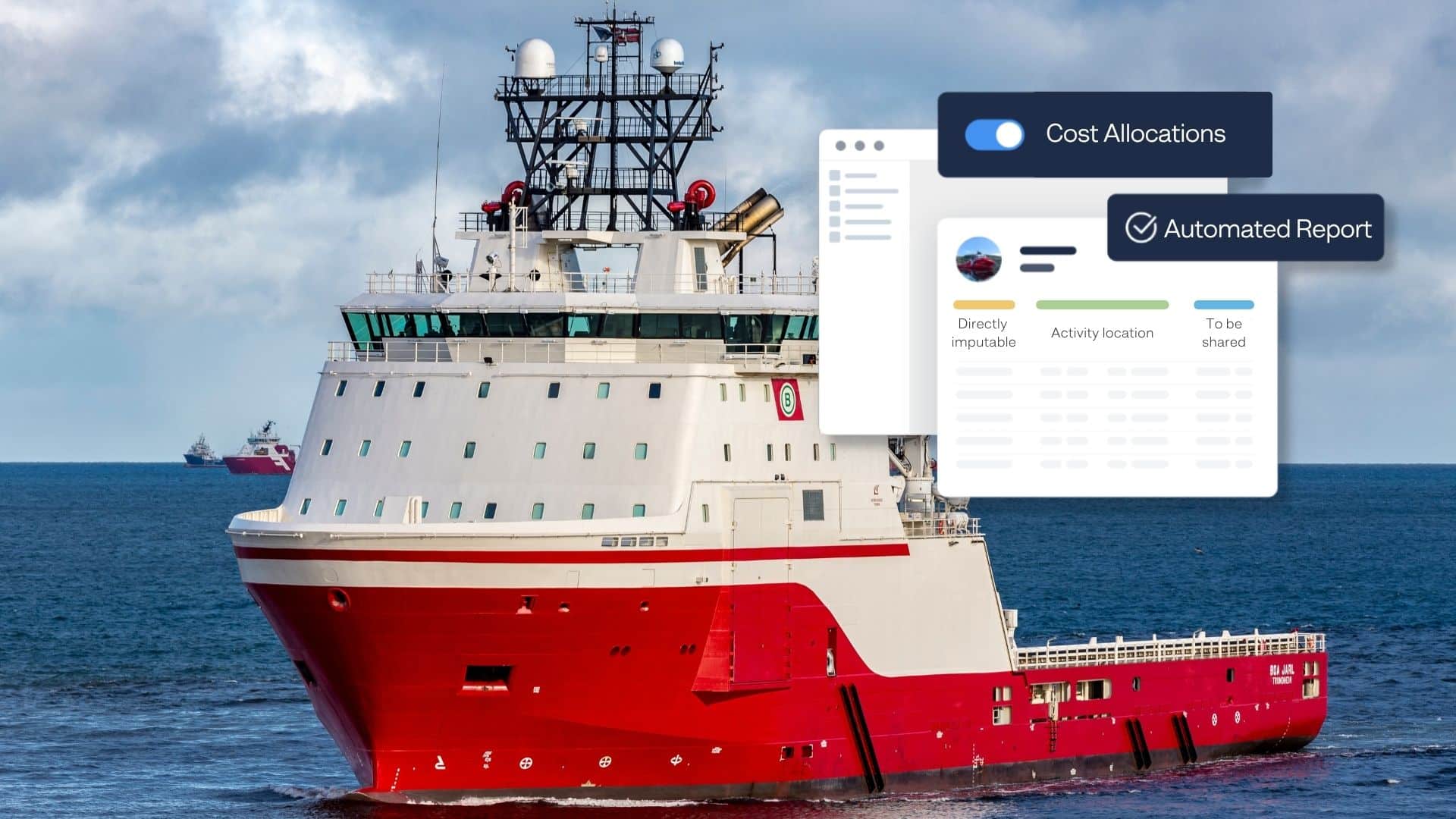
A charterer disputes an invoice. The shipowner pulls three different reports, and none of them agree on how many passengers the vessel was occupied. That gap is where most of the cost control problems start. It’s rarely bad faith on either side…But each error can be very expensive.
This blog covers the realities and the opportunities each maritime company should consider when considering offshore vessel cost control in their teams.
Why vessel cost data stays fragmented across systems
Digitalization studies from Lloyd’s Register point to the same root cause across the industry. Fleet cost data lives across ERP systems, accounting software, vessel reports, procurement platforms, and spreadsheets that were never built to talk to each other.
Excel carried most fleets through the early years. It still works fine for a single vessel or a short campaign.
Past that, version control and manual reconciliation catch up with every operator who scales. Nobody can say with confidence which spreadsheet is the current one, or who touched it last.
What fragmented data costs charterers and shipowners
OSV day rates for offshore campaigns commonly run into five figures. Multiply that across a multi-vessel contract, and a handful of misattributed nights, duplicate invoices or missing cost codes stop being rounding errors. They become real money, fast.
Gartner’s research on data quality puts a number on the wider cost of this: millions lost annually to reporting errors and operational rework. In offshore operations, that poor data quality comes from fragmentation itself: the same vessel, port call or invoice line entered manually into five different systems by five different teams, with no single version to check against.
https://www.gartner.com/en/data-analytics/topics/data-quality
The charterer ends up questioning numbers they can’t independently verify. The shipowner ends up defending figures they can’t fully trace back to source. On contracts this large, that back-and-forth costs more than time. It wears down a relationship that both sides need to keep working.
The four report categories behind offshore cost control
Vessel cost allocation isn’t one report. It splits into four categories, and each one answers a different clause in the charter party:
- On/Off Hire
- Meals and Beddings
- Port fees
- Vessel Cost Allocation
They can’t be treated as differentiated cost buckets, and it’s what makes disputes so hard to resolve. Nobody can point to which specific charge is being questioned, or why, when everything sits in one blended figure.
How standardized data turns into an invoice nobody disputes
Standardization starts, for example, with naming. A vessel logged as “PSV Aurora” in procurement, “Aurora” in accounting and “MV Aurora” in the port call log reads as three different assets to anyone reconciling costs by hand.
Mapping those to one reference takes time. But It’s also the step that makes every report downstream trustworthy. For example, passenger data may be recorded daily onboard, distinguishing between accommodated and transited personnel. Without structured consolidation, teams cannot produce a reliable historical view per vessel and per day.
For shipowners, this impacts invoicing accuracy.
For charterers, it can limit the ability to validate invoices.
Putting a neutral party between charterer and shipowner
Charterer, shipowner, and operator each hold a piece of the cost picture, and none of them has the full one on their own.
A trusted third party sitting across all three changes that. It standardizes the naming, cleans the historical records, and pulls procurement, accounting, operational reports, and crew logistics data into one structure that all sides can check against.
That’s what makes a claim bulletproof with a single source of truth: charterer and shipowner both trust because neither one built it alone.
Learn more about cost allocation: https://opsealog.com/the-power-of-data-quality-in-streamlining-offshore-cost-allocation/
The Payoff: Faster Procurement, Sharper COO Decisions
For procurement and contract managers, the shift is immediate. Suppliers get compared on the same basis instead of on whichever numbers happened to be handy that month. KPIs get validated against actual data instead of estimates. And when a charge gets questioned, the answer traces back to source in minutes, not days spent pulling files from five departments.
For COOs and fleet leaders, the shift is strategic. Reviewing aggregated OPEX gives a number. Reviewing vessel-level cost data gives a reason. Which vessel is driving the spend, which contract performs against its terms, which supplier consistently delivers value. Budgeting stops being built on last year’s average and starts being built on what each vessel costs, category by category.
None of these needs a new contract structure.
It needs the underlying data to be standardized, cleaned, and traceable to one source before it ever reaches an invoice.
If you want to have a direct chat with our Sales & Account Managers on offshore cost control or any other topic: