
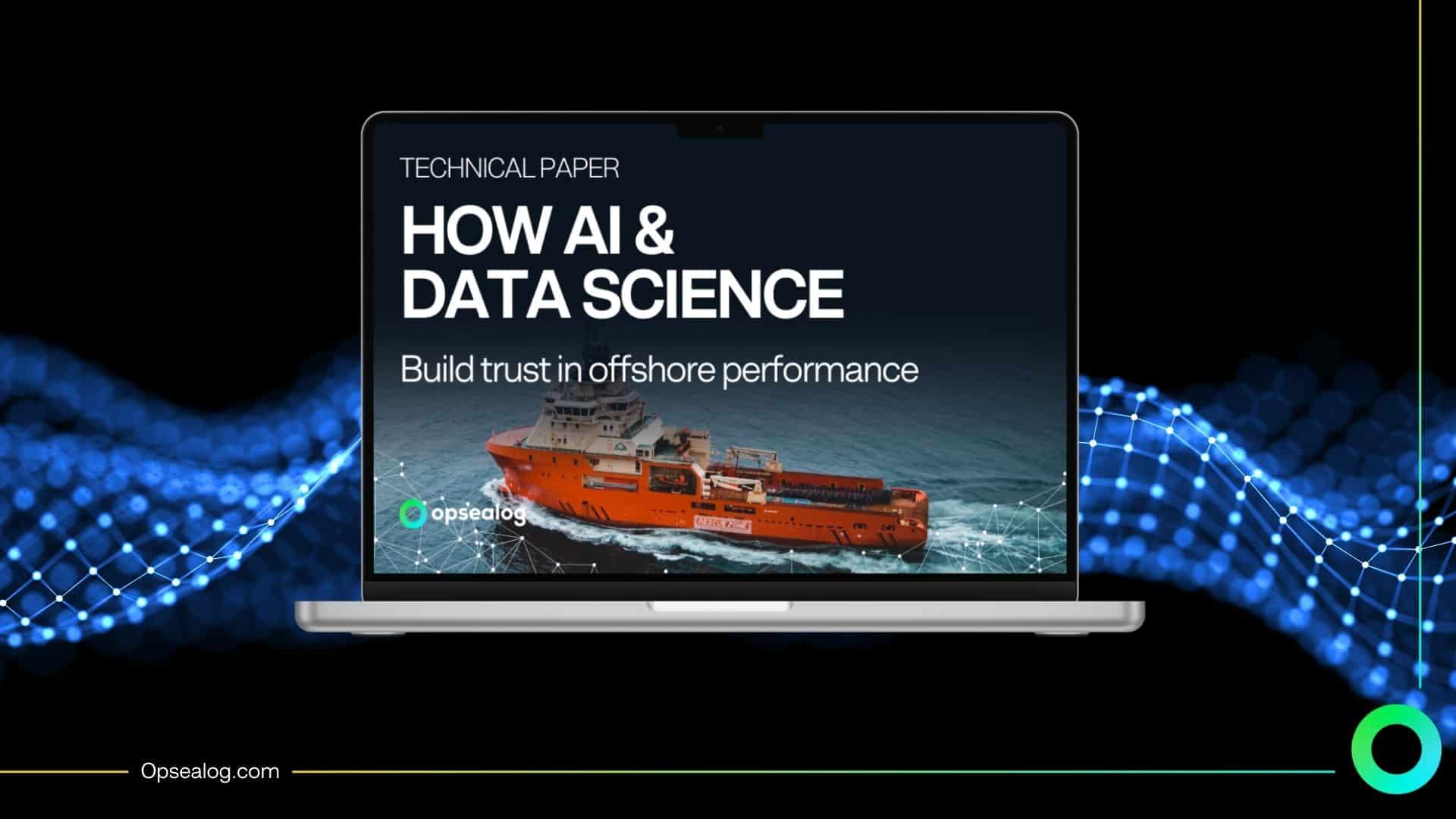
How AI and Data Science Build Trust in Offshore Performance

Sep 8, 2025 | White Papers

According to Gartner’s 2023 AI in Maritime Operations report (source), organizations that integrate AI and data science in their decision support see efficiency gains of up to 25%. Our paper shows how this applies specifically to offshore supply vessels.

Modern offshore vessels generate massive volumes of operational information, but without the right expertise, this data often remains fragmented, inconsistent, or underused. In this technical paper, Opsealog demonstrates how advanced data science and AI can transform raw inputs into actionable intelligence that drives measurable fuel, emissions, and operational performance gains.

Working with over 1,000 offshore vessels worldwide, we share proven methodologies, real-world use cases, and the technology that makes it possible to trust your data for critical operational decisions.

Inside this technical paper, you will learn:

  • How to turn messy logs into reliable intelligence using advanced processing, model training, and maritime expertise.
  • Real-world case studies showing efficiency gains, optimal speed recommendations, and performance benchmarking across sister ships.
  • How AI-powered decision-support platforms help crews and shore teams act with confidence.
  • The role of continuous model retraining and explainability in maintaining trust in your KPIs.

Who Should Read This

This technical paper is designed for:

  • Offshore fleet managers and superintendents
  • Charterers and shipowners in oil & gas, offshore wind, and maritime logistics
  • Operations and sustainability teams are working on fuel efficiency and emissions reduction
  • Anyone looking to understand how AI and maritime expertise combine to deliver measurable performance improvements

Download the Technical Paper

Fill out the form below to receive your free copy of “Data Science and AI for Offshore Vessel Performance”.


About Opsealog

Opsealog provides Efficiency as a Service for the offshore maritime industry. Combining software, maritime expertise, and data science, we help operators turn raw vessel data into reliable, actionable insights that improve operational efficiency and environmental performance.

OSJ London 2026: Key Takeaways for the Offshore Support Vessel Industry

The Offshore Support Journal Conference returned to London in February 2026, bringing together shipowners, charterers, class societies, and technology providers to discuss the current state of the OSV market and its outlook. Opsealog was present at the event, with...

Opsealog and ADNOC Logistics & Services renew partnership to expand OSV fuel efficiency and fleet performance program

Renewed contract formalizes a five-year collaboration, scaling digital performance management across one of the world’s largest OSV fleets. Marseille (France) / Abu Dhabi (UAE), 3rd of February 2026 – Opsealog, a provider of data integration and performance management...

Marine Fuel Optimization Starts with Data: Insights from Offshore Operations

Fuel optimization is often treated as an isolated objective. In reality, its success depends on one critical factor: data quality. Without accurate, consistent data, identifying trends or deviations becomes guesswork, which is something few teams can afford. Yet fuel...

Opsealog enters a new phase of development with the support of GO Capital and Sud Mer Invest fund

Marseille (France) – 20 January 2026 – Opsealog, a pioneer in operational and environmental performance solutions for maritime fleets, today announced a major evolution in its corporate structure following a strategic carve-out. The management team has joined forces...

Onboarding Crew to Digital Solutions: 4 Practical Steps for Offshore Operations

The success of any digital initiative at sea or in maritime operations doesn’t depend on the technology — it depends on the people using it. Crews already balance tight schedules, heavy reporting, and demanding operational requirements. A new dashboard or reporting...

Why Tracking Engine Running Hours is Key for Shipowners

Engine running hours are often treated as a background metric. Yet for offshore vessels, they carry direct operational and financial consequences. Maintenance frequency, fuel use, emissions, and even asset integrity all connect back to how long engines are in use, and...

2025 Global OSV Market Report

Get the latest data on offshore vessel operations, performance, and environmental impact. Offshore operations continue to evolve. In a market shaped by energy transition, rising efficiency targets, and shifting contractual dynamics, knowing how your vessels perform is...

Charter Party Agreements: Why a Third-Party Solution Matters

Offshore charter party agreements are contracts that govern day-to-day operations, define fuel responsibilities, and can quietly drain budgets and relationships if not managed well. Yet, despite their strategic importance, many offshore charter track contracts are in...

How to Leverage Multiple Data Sources for Smarter Decisions

Offshore vessels are generating more data than ever before. They continuously send information to shore through sensors, automated systems, and manual reports from seafarers. But raw data alone doesn’t improve efficiency. What matters is how that data is processed,...

Beyond Monitoring: How Data Science Fuels Smarter Offshore Operations

Hosted by Digital ship on the 29th of April, this webinar highlighted how data science can best be used to help shipowners and charterers identify ways to improve the efficiency of maritime operations and generate returns. Improving vessel performance starts with one...